Thirty-five years of the slow press
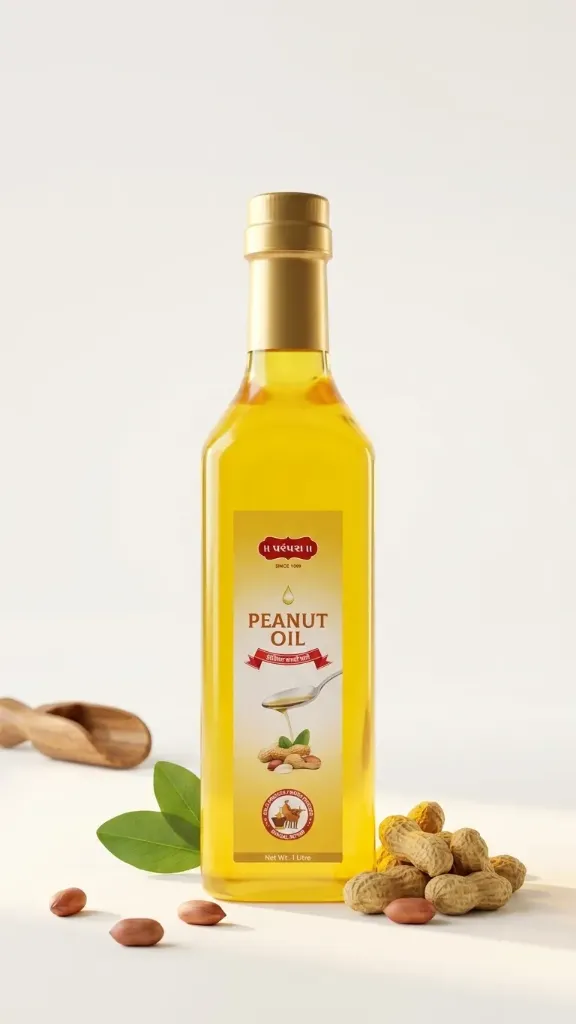
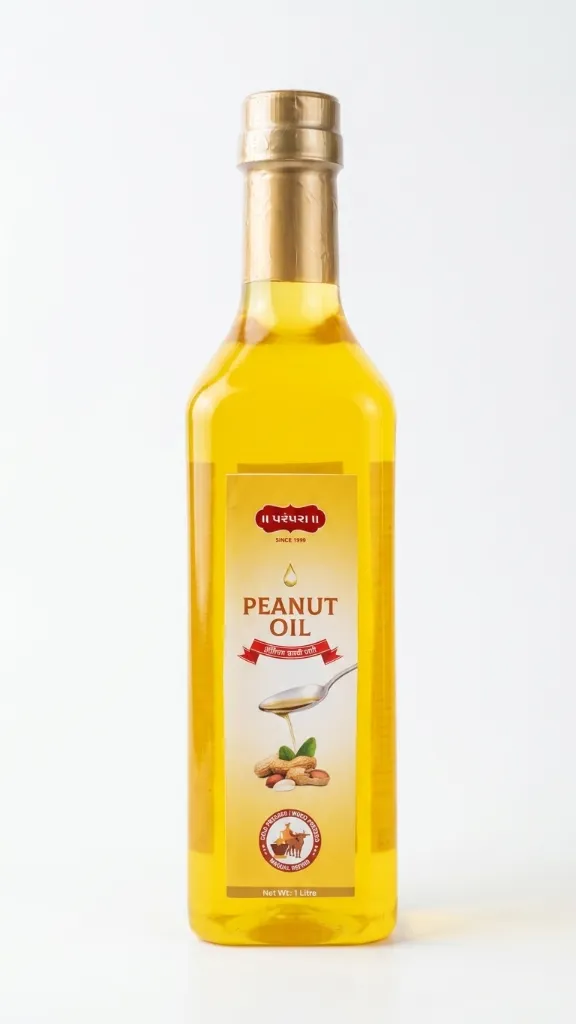
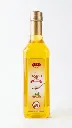
Parampara started pressing oil in 1990. Since then the industry has gone almost entirely to high-speed expellers and multi-stage refineries — faster, cheaper, and stripped of everything that gave the oil character. We stayed with the wooden ghani turning at low speed, the method illustrated on the seal on our bottle.
Slow pressing keeps the temperature down. Low temperature is why the oil still carries a faint nuttiness instead of tasting of nothing at all. It also means less oil per kilo of seed. That's the trade, and we've made it deliberately for thirty-five years.
Why groundnut oil is the western Indian standard
It's mild, not neutral. There's a gentle nuttiness underneath that complements Indian spicing rather than competing with it — the reason it never got displaced from Gujarati and Maharashtrian kitchens even when cheaper oils arrived.
It fries well. Groundnut oil has long been the frying medium of choice across western India, from gathiya and fafda to bhajiya and vada.
It doesn't dominate. Where mustard oil announces itself, groundnut oil steps back. For a cuisine built on tempering and masala, that restraint is the whole point.
What's in the bottle
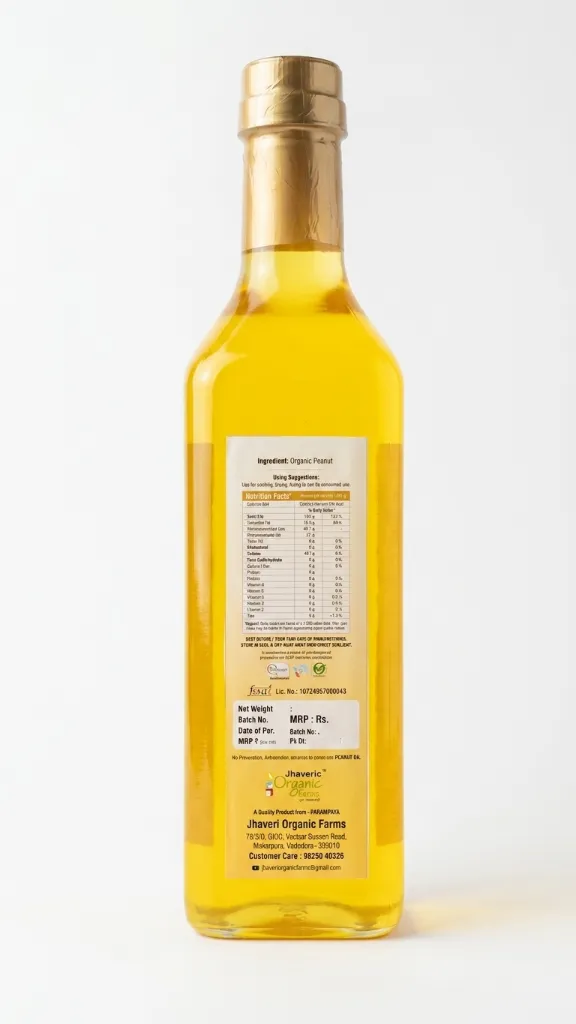
Ingredient: Organic Peanut. That's the complete list.
- Cold pressed / wood pressed in a traditional kachi ghani
- No chemical solvent extraction — no hexane at any stage
- No preservatives, no antioxidants, no artificial colours
- Certified organic — produced in compliance with NPOP organic standards
- Natural settling is normal in a traditionally pressed oil
How to use it
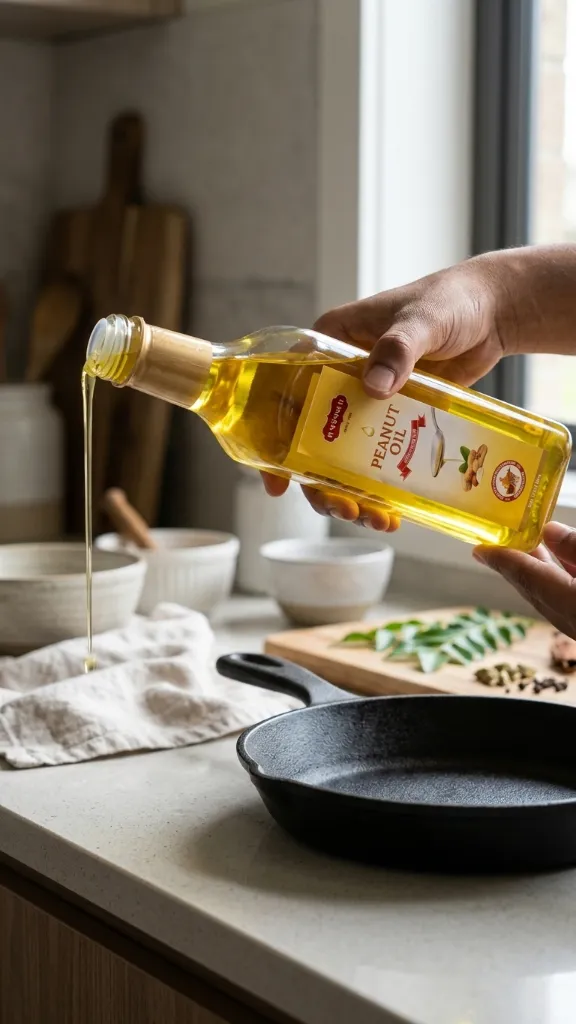
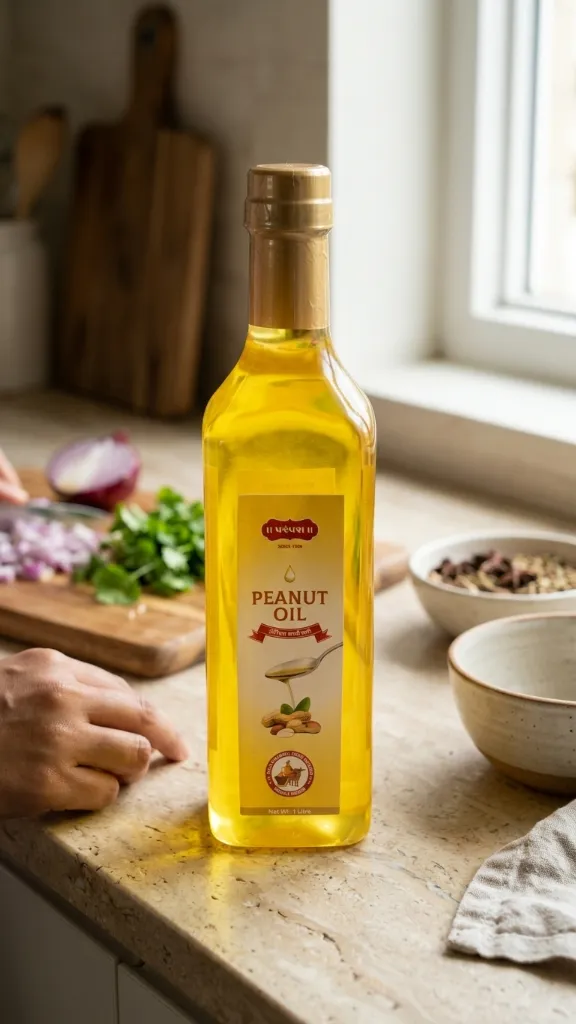
Using suggestion, as printed on the pack: use for cooking, frying and sautéing, or consume raw.
|
| Everyday Gujarati cooking | Undhiyu, shaak, dal, khichdi — the default cooking medium |
| Maharashtrian cooking | Bhaji, usal, misal, thalipeeth |
| Farsan & frying | Gathiya, fafda, bhajiya, vada, sev |
| Tempering (vaghar / tadka) | Mild enough to let mustard, hing and curry leaf come through |
| Pickling | A common achar oil across Gujarat and the Deccan |
| Chutneys & raw dressings | Its nuttiness works well uncooked |
| Baking & sweets | Sukhdi, chikki, and anything where a neutral-ish fat is wanted |
A note on heat: cold-pressed, unrefined oils sit at a lower smoke point than their refined equivalents. This oil handles everyday cooking, sautéing and shallow frying comfortably. For prolonged deep frying, keep it at a steady moderate temperature rather than pushing it hard, and don't reuse the oil repeatedly.
Who buys this oil
Gujarati and Maharashtrian households · Cooks moving off refined and solvent-extracted oils · Anyone who wants a mild everyday oil that isn't chemically stripped · Families who fry at home and want to know what they're frying in
Key Features
- COLD PRESSED / WOOD PRESSED KACHI GHANI — slow wooden ghani, the traditional method
- SINGLE INGREDIENT — organic peanut, nothing else
- NO SOLVENT EXTRACTION — hexane-free from seed to bottle
- ORGANIC CERTIFIED — produced in compliance with NPOP organic standards
- 48.7 g MUFA + 27.5 g PUFA per 100 g — with saturated fat at 15.0 g
- ZERO CHOLESTEROL · ZERO TRANS FAT
- NO PRESERVATIVES, ANTIOXIDANTS OR ARTIFICIAL COLOURS
- MILD, CLEAN FLAVOUR — versatile enough for daily cooking
- 1 LITRE BOTTLE
- FSSAI LICENSED — Lic. No. 10724957000043
- BEST BEFORE 1 YEAR from date of manufacturing
- PRESSING SINCE 1990 — Jhaveri Organic Farms, Vadodara, Gujarat
Nutrition Facts (per 100 g, as printed on pack)
|
| Calories | 804 |
| Total Fat | 100 g |
| — Saturated Fat | 15.0 g |
| — Monounsaturated Fat | 48.7 g |
| — Polyunsaturated Fat | 27.5 g |
| — Trans Fat | 0 g |
| Cholesterol | 0 g |
| Total Carbohydrate | 0 g |
| Dietary Fibre | 0 g |
| Protein | 0 g |
Percent daily values are based on a 2000 calorie diet. Daily values not established.
Storage
Store in a cool, dry place away from direct sunlight. Keep the cap tightly closed. Best before 1 year from the date of manufacturing printed on the pack.