Twenty-five years of doing it the slow way
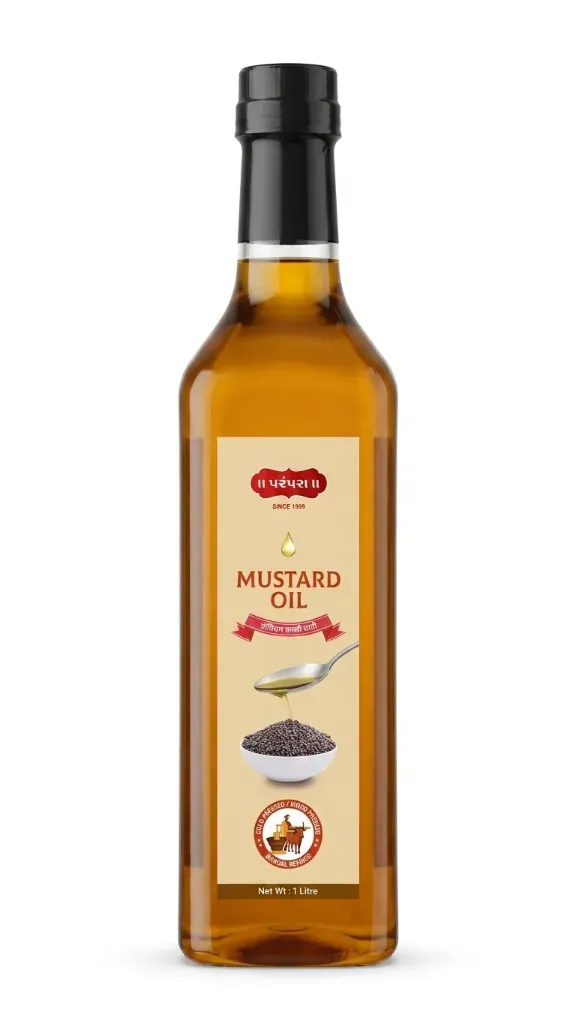
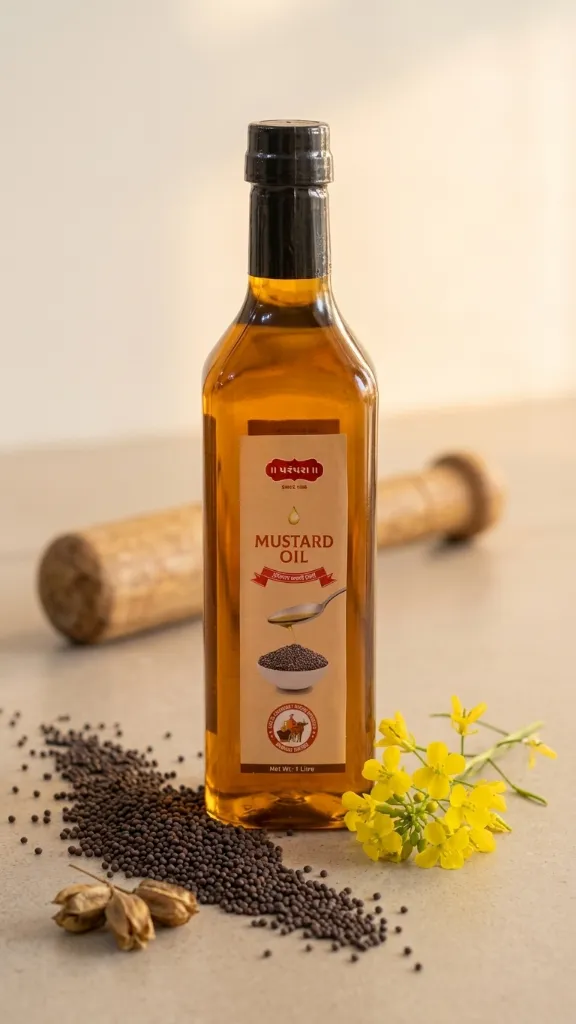
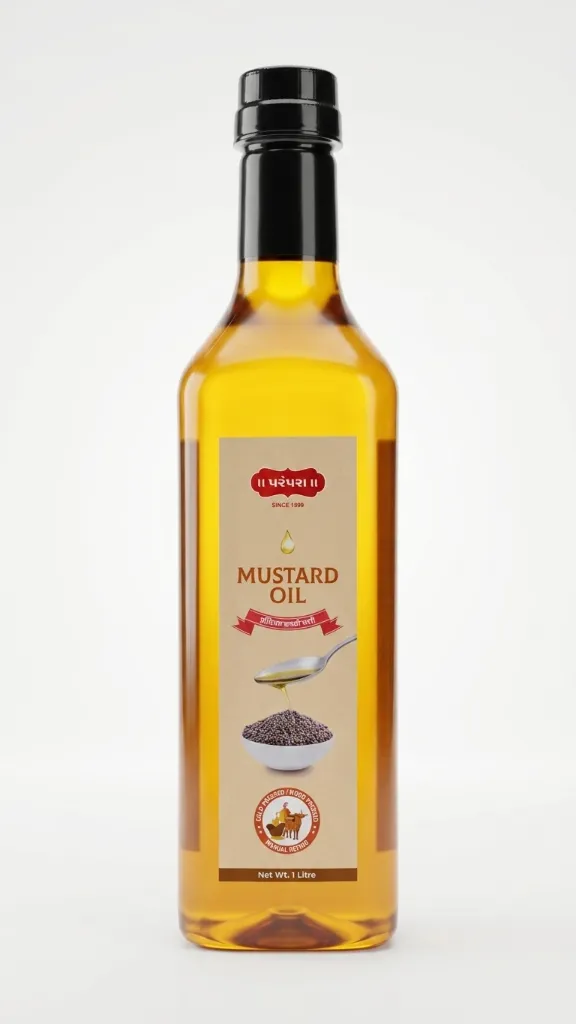
Parampara has been pressing oil since 1999. In that time the industry moved to high-speed expellers and multi-stage refineries, and the oil on most shelves became pale, silent and interchangeable. We stayed with the wooden ghani turning at low speed — the method shown on the seal on our bottle, the bullock and the kolhu and all.
Slow pressing keeps temperatures low. Low temperature is why our oil still smells like mustard, still bites, still looks the deep golden it's meant to look. It also means we get less oil from the same quantity of seed. We've made peace with that.
Why mustard oil earns its shelf space
It takes heat. Kachi ghani mustard oil has one of the highest smoke points of any traditional Indian cooking oil — a large part of why it has been the frying medium of choice across eastern and northern India for centuries. Deep fry in it, and it holds.
It carries flavour instead of hiding it. The pungency comes from the mustard itself. Heat the oil to smoking point once before cooking, as most Indian cooks do, and it mellows into something warm and rounded that neutral oils simply cannot deliver.
It preserves. There is a reason every serious pickle recipe in this country specifies mustard oil.
What's in the bottle
Ingredient: Organic Mustard. That's the complete list.
- Cold pressed / wood pressed in a traditional kachi ghani
- No chemical solvent extraction — no hexane at any stage
- No preservatives, no artificial colours, no added flavouring
- Certified organic by IMO Control; carries the India Organic mark
- Natural sediment is normal in a traditionally pressed oil — settle it, don't worry about it
How to use it
Serving suggestion, as printed on the pack: use for cooking, sautéing and frying, or consume raw.
|
| Deep frying & pakoras | Its high smoke point is the reason it's the traditional frying oil |
| Bengali & Odia cooking | Machher jhol, shorshe bata, aloo posto — non-negotiable here |
| Bihari & UP kitchens | Litti-chokha, sattu, everyday tarkari |
| Punjabi cooking | Sarson ka saag, makki di roti, tandoori marinades |
| Pickling | The classic achar oil — aam, nimbu, mirch, gobhi |
| Marinades | Cuts through fish and meat better than any neutral oil |
| Raw drizzle | Over chaat, salads, or a bowl of dal, in small quantity |
| Abhyanga & champi | The traditional winter massage and hair oil of north India |
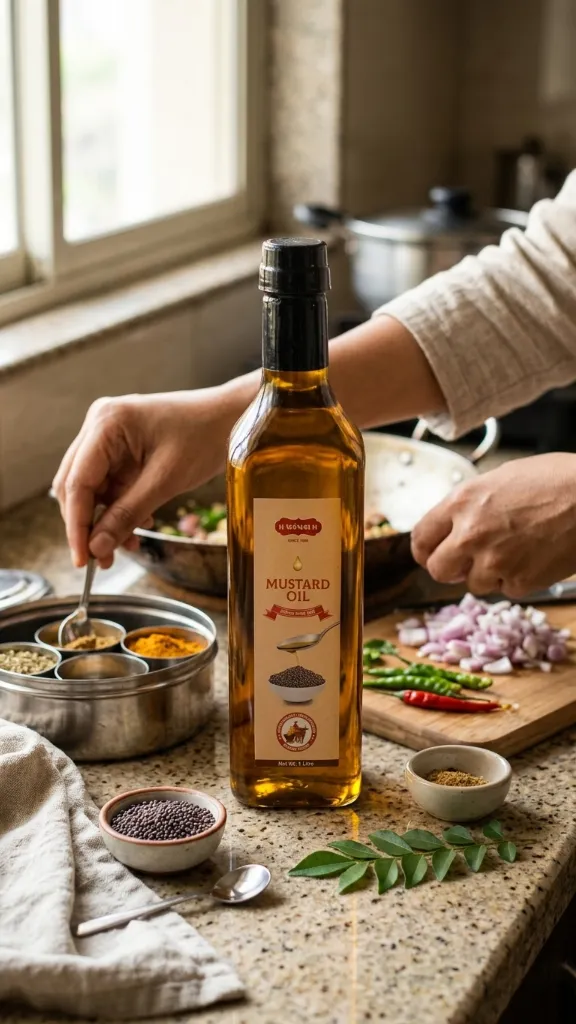
A cook's tip: heat the oil until it just begins to smoke, then take it off the flame for a few seconds before adding your tempering. This is standard practice with kachi ghani mustard oil and softens the raw pungency into depth.
Who buys this oil
Bengali, Bihari, Odia, Punjabi and UP households · Anyone moving off refined and solvent-extracted oils · Home picklers · Cooks who deep fry and want an oil that can take it · Families keeping traditional practices alive
Key Features
- COLD PRESSED / WOOD PRESSED KACHI GHANI — slow wooden ghani, the traditional method
- SINGLE INGREDIENT — organic mustard, nothing else
- NO SOLVENT EXTRACTION — hexane-free from seed to bottle
- CERTIFIED ORGANIC — certified by IMO Control, carries the India Organic mark
- HIGH SMOKE POINT — suited to deep frying, unlike most cold-pressed oils
- FULL NATURAL PUNGENCY — the aroma and bite that processing strips out
- NO PRESERVATIVES OR ARTIFICIAL COLOURS
- 1 LITRE GLASS BOTTLE — no plastic leaching, fully recyclable
- FSSAI LICENSED — Lic. No. 10771223000109
- BEST BEFORE 1 YEAR from date of manufacturing
- PRESSING SINCE 1999 — Jhaveri Organic Farms, Vadodara, Gujarat
Nutrition Facts (per 100 g, as printed on pack)
|
| Total Fat | see note below |
| — Saturated Fat | see note below |
| — Monounsaturated Fat | see note below |
| — Polyunsaturated Fat | see note below |
| Trans Fat | 0 g |
| Cholesterol | 0 g |
| Sodium | 0 g |
| Total Carbohydrates | 0 g |
| Dietary Fibre | 0 g |
| Sugars | 0 g |
| Protein | 0 g |
Percent daily values are based on a 2000 calorie diet. Daily values not established.
Storage
Store in a cool, dry place away from direct sunlight. Keep the cap tightly closed. Best before 1 year from the date of manufacturing printed on the pack.