One of the oldest grains still on an Indian plate
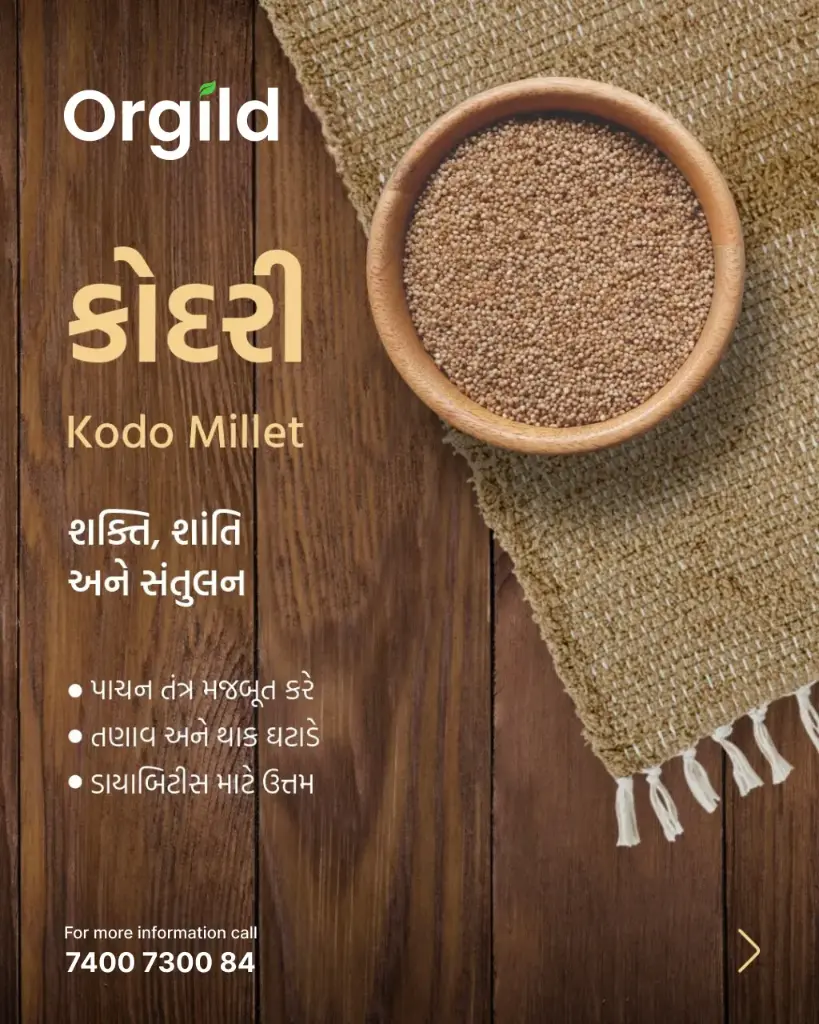
Kodo millet has been cultivated in India for around three thousand years. It belongs to the dry belt — Gujarat, Madhya Pradesh, the Deccan — where it survived on rainfall other crops couldn't use and stored well without refrigeration.
It fell out of the mainstream when subsidised rice and wheat arrived. It's coming back now for the same reasons it mattered originally: it grows on almost nothing, and it eats well.
What it's actually like to cook and eat
Kodo is one of the more substantial millets. The cooked grain is slightly firm, faintly nutty, and holds separate rather than collapsing — closer to a coarse rice than to a porridge grain.
Because it's high in fibre, a bowl of kodo sits differently from a bowl of white rice. People who switch usually notice they eat less of it and stay full longer. That's a texture and satiety observation, not a medical one — but it's the most common thing customers report back.
Certified organic, genuinely unpolished
Most millet sold in India is polished to remove the outer layer, which improves appearance and shelf life and removes a good part of the fibre along with it.
Ours isn't. The grain looks a little duller and a little less uniform than polished millet, and takes a few minutes longer to cook. That's the trade.
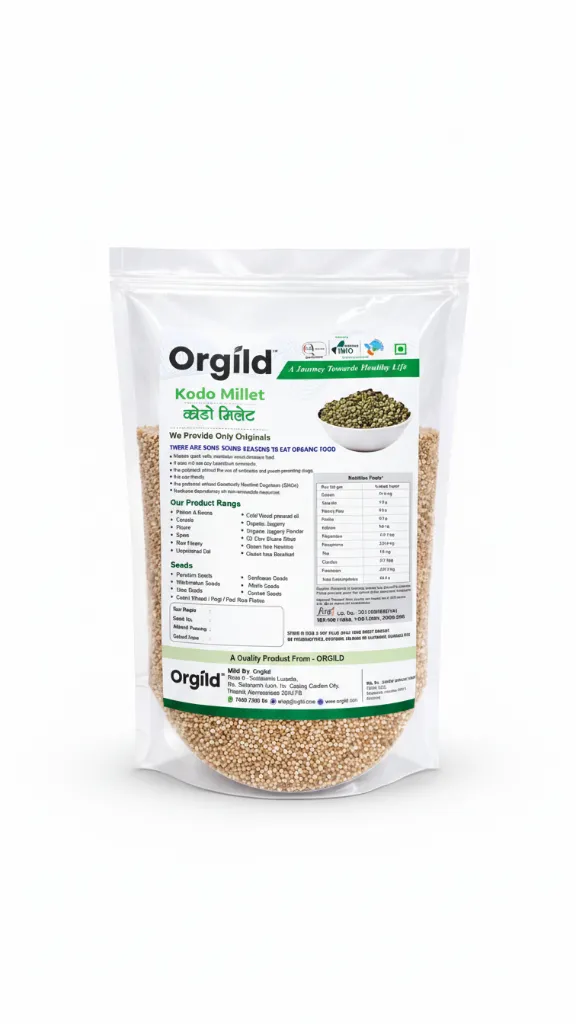
There are some sound reasons to eat organic food:
- It tastes good — safe, nutritious, unadulterated food
- It does not use any hazardous chemicals
- It is produced without antibiotics or growth-promoting drugs
- It is eco-friendly
- It is produced without Genetically Modified Organisms (GMOs)
- It reduces dependency on non-renewable resources
How to cook it
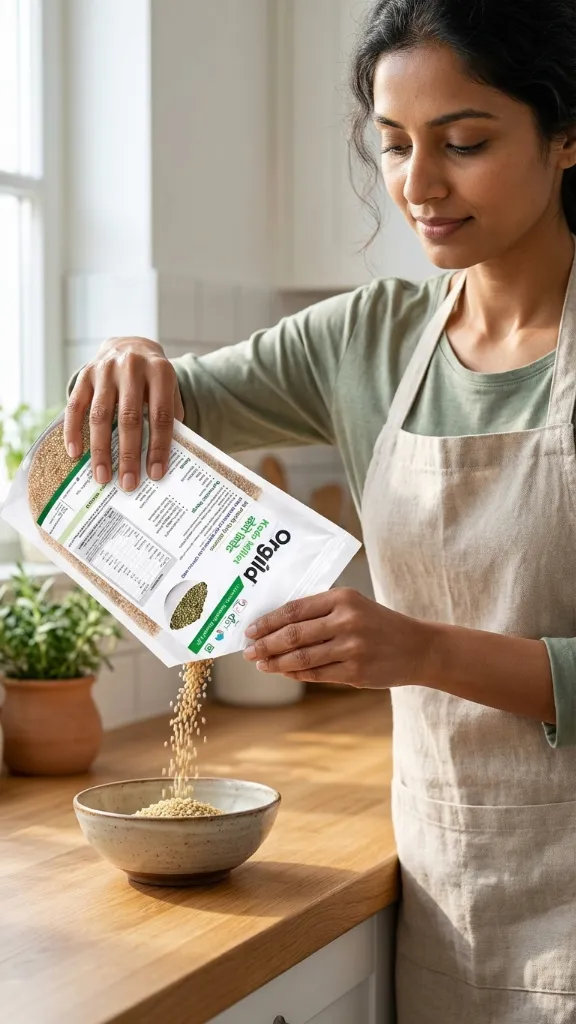
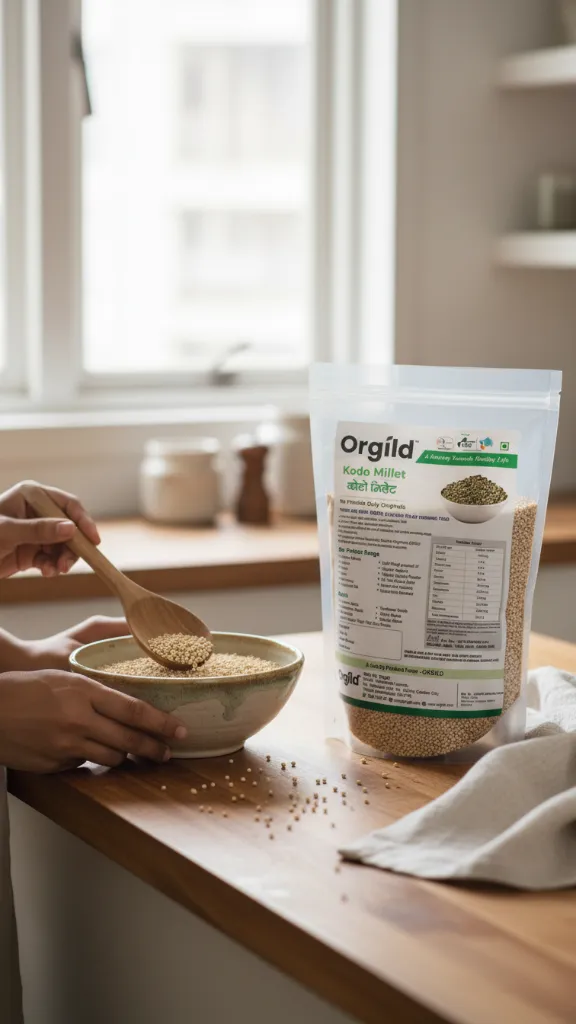
Rinse thoroughly in two or three changes of water. Soak 20–30 minutes if you have time — it improves the texture and shortens cooking. Then simmer 1 cup kodo to 2½ cups water for about 20 minutes, or pressure-cook for 2 whistles. Rest covered for five minutes before fluffing.
|
| Kodo Khichdi | 1:1 with moong dal, pressure-cooked — the most common way it's eaten |
| Kodo Upma | Roast first, then cook with mustard, curry leaf and vegetables |
| Plain steamed, as rice | A direct swap with dal, kadhi or sambar |
| Millet Pulao & Biryani | Holds its shape well; use slightly less water than for rice |
| Dosa & Idli | Replace up to half the rice in your batter |
| Kheer & Porridge | Slow-cooked with milk and jaggery |
| Grain Bowls & Salads | Cook, cool, dress — it doesn't go sticky |
| Rotla & Flatbread | Ground into flour, the traditional Gujarati preparation |
Who this is for
Households moving away from polished white rice · Gluten-free kitchens · Anyone rebuilding a millet-forward thali · Gujarati families returning to kodari · Cooks who want a grain that keeps them full
Key Features
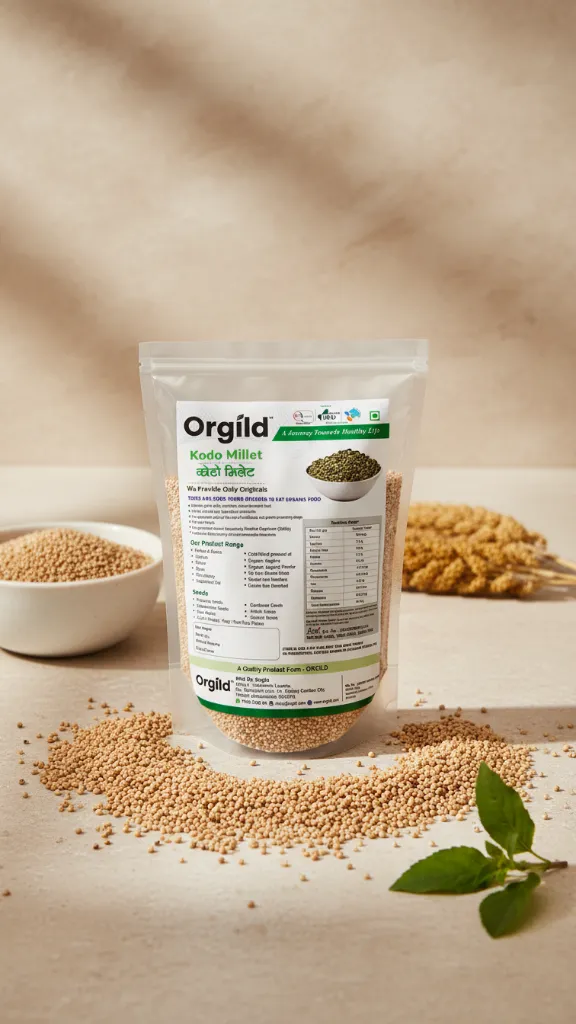
- CERTIFIED ORGANIC — SGS Organic (NPOP/NAB/009) and IMO Control certified, carrying the India Organic mark
- WHOLE & UNPOLISHED — outer layer intact, nothing buffed away for looks
- NATURALLY GLUTEN-FREE — suitable for gluten-free diets
- HIGH IN DIETARY FIBRE — one of the higher-fibre millets (confirm against lab report — see notes)
- A GOOD SOURCE OF MAGNESIUM AND PHOSPHORUS
- NO PRESERVATIVES, ARTIFICIAL COLOURS OR FLAVOURING CHEMICALS
- GROWN WITHOUT SYNTHETIC PESTICIDES — non-GMO, chemical-free farming
- DROUGHT-RESILIENT TRADITIONAL CROP — low water, low input
- 100% VEGETARIAN — green dot certified
- FSSAI LICENSED — Lic. No. 20725038003114
- ISO CERTIFIED PROCESSING — ISO 9001:2008, ISO 14001:2004, ISO 22000:2005
- RESEALABLE FOOD-GRADE POUCH
Storage
Store in a cool, dry place away from direct sunlight. Reseal the pouch after every use, or transfer to an airtight container. Keep dry.
Certifications
SGS Organic (NPOP/NAB/009) · IMO Control Certified Organic · India Organic · FSSAI Lic. No. 20725038003114 · ISO 9001:2008 · ISO 14001:2004 · ISO 22000:2005 · 100% Vegetarian (Green Dot)